Devilish Deviled Eggs

Deviled eggs have awakened after dozing off in the 70's. Deviled eggs were standard fare at family get-together's but everyone's were the same. It was like there was a master recipe out there that didn't allow anyone to vary from the "Standard Deviled Egg"......well, how many of those can you possibly eat? So they just faded. Classics always come back in a reinvented form.......it's now time to put the "Devil" back into Deviled Eggs.

"He-Devil"
with Broadbent's bacon and chives.


"She-Devil"
with smoked salmon and capers


The Art of Writing Recipes


René Redzepi, owner of Noma in Copenhagen holds the number 1 spot on the World's 50 Best Restaurant list. Redzepi is also the man behind MAD, A non-profit community of chefs, cooks and farmers with an appetite for knowledge. "Mad" is also the Danish word for "food."  EATER recently did an article about a tour of the Culinary Science Bunkers of Noma. MAD also has a resource site called MADFeed which has great articles and videos.

One of their recent articles was about writing recipes. In the piece Christine Muhlke, executive editor of Bon Appétit and co-author of Eric Ripert’s On the Line and David Kinch’s Manresa explored different styles of communication and addresses topics I have always thought about while writing my own recipes.

I have spent most of my career writing recipes for Chefs and Cooks who are located 100's or even 1000's of miles away. This article really hit home with me because it addresses how much intuitive cooking ability you should rely on from the end user, or what are some visual markers that reduce any misinterpretations about the cooking process embodied in these recipes.

Here is one style provided:

Get a frying pan very hot, pop in your knob of butter, followed by the hearts, and fry them for 4 minutes, rolling them around occasionally. Apply a splash of balsamic vinegar and chicken stock, season, and let the hearts get to know the liquor for a couple of minutes. Place the hearts on the toast, leave the sauce on the heat to reduce for a moment, and pour over the toast and duck hearts. Eat. The hearts have an amazingly ducky quality. — From “Nose to Tail Eating: A Kind of British Cooking,” Fergus Henderson.

Kentucky Proud

I've been working on Low Country cuisine recipes and I've been graced with some fantastic products from Kentucky. There's a cool group called Kentucky Proud that works hard to get these local products into restaurants, it's been pretty great working with them. This is a fraction of what I've used during recipe development, there's also been great hams, Kenny's Farmhouse White Cheddar, and so much more! Here's a sampling of few items they represent.


From Top Left to Right

Broadbent's Country Bacon, Kuttawa Kentucky
You know it's REAL bacon, the way it was made 100 years ago, when the label says "No Refrigeration Required".

Weisenberger Mills White Stone Ground Grits, Midway Kentucky
These are some of the best grits made with non GMO corn grown in Hardin County Kentucky at the Rogers Farm.

Bourbon Barrel Foods, Louisville Kentucky
If you haven't heard of this soy sauce it's a must have. They make it with non GMO Kentucky grown soybeans and pure limestone filtered spring water. It's brewed and aged in used bourbon barrels and the barrels are only used once. It's a true micro brew, each bottle has a handwritten batch number and bottle number.

Bourbon Barrel Smoked Sugar!
After the bourbon barrels are used once for the soy sauce they are used to smoke different items.

Kentuckyaki Sauce
That's not a typo!

Smoked Sea Salt
This is a great finish for steaks, pork, butter, caramel sauce....... I could go one endlessly!

As The Gardening Season Winds Down...

It was brought to my attention this summer that my garden looked better than my lawn.....guilty I guess! How excited can you get about growing a lawn? You can't eat it so what's the point? Maybe this is just "Chef Brain" but there is so much talk about organic sustainable gardening that I think it would be perfectly acceptable to till up your entire yard to grow tasty Vittles.....Nope, the subdivision committee and city council would be on me like foodies on Foie Gras! When I lived in London the English Garden would embrace this idea. Martha gets it in this article describes it as "Edible Estate".


Ramen Noodles

Most of us can probably cook fairly well with a full pantry of ingredients but making something really good using only a few ingredients is the most rewarding. These types of recipes are usually technique heavy and I believe they are the basic building blocks of rudimentary cooking. We tend to forget there was a time when unlimited amounts of ingredients were not available to cook’s. Sourdough bread comes to mind, water + flour + salt.....there better be some solid technique involved because these three ingredients have a better chance of tasting like crap than not, but when you can transform them into something great it’s magical!

Another recipe using simple ingredients is ramen noodles – water + flour + baking soda*

There are several articles in first edition of David Chang’s magazine Lucky Peach, it's about everything ramen. I was intrigued by the alkaline noodle recipe, aka ramen noodles. The recipe involves taking baking soda and baking it at 250° for 1 hour. This process changes the sodium bicarbonate to sodium carbonate, an alkaline salt. This method was developed by Harold McGee and published in the NY Time. Previously this ingredient could only be purchased at a specialty store, commonly called kansui.

The chilled ramen dough

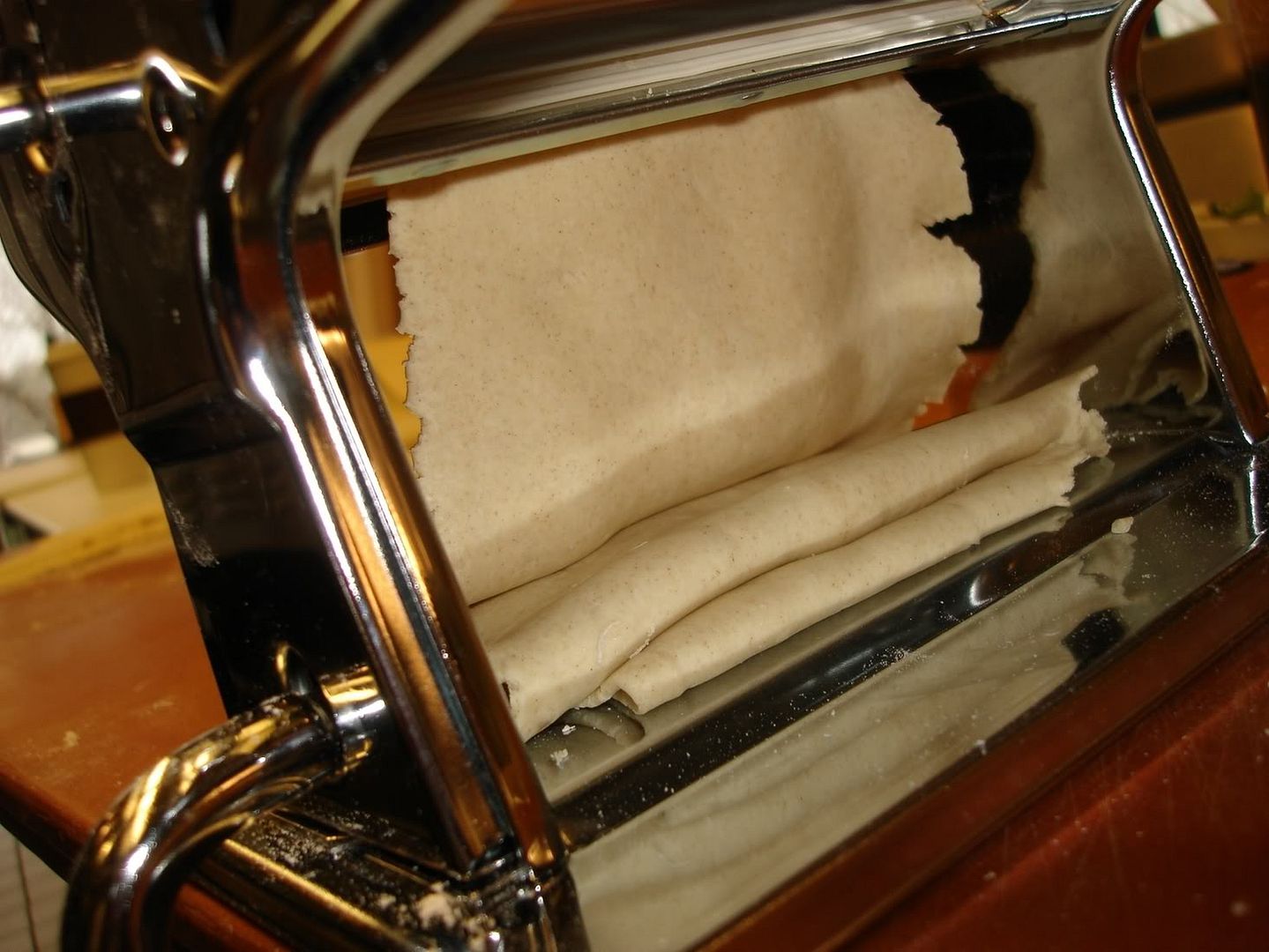
Step #1 - run the dough through a pasta roller.

The ramen dough after sheeting it out on the pasta roller.

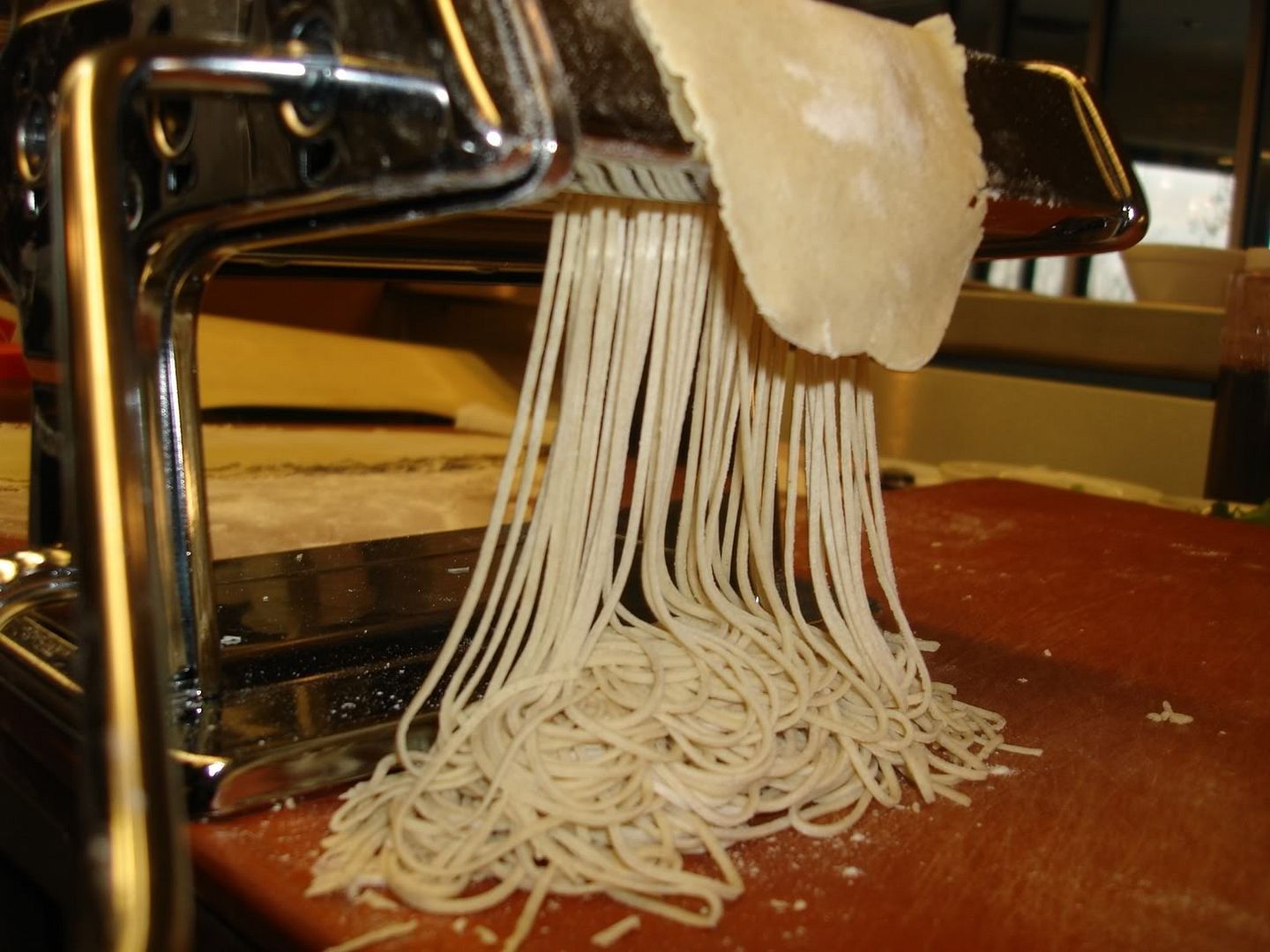
Step #2 - Running the dough through a cutter.


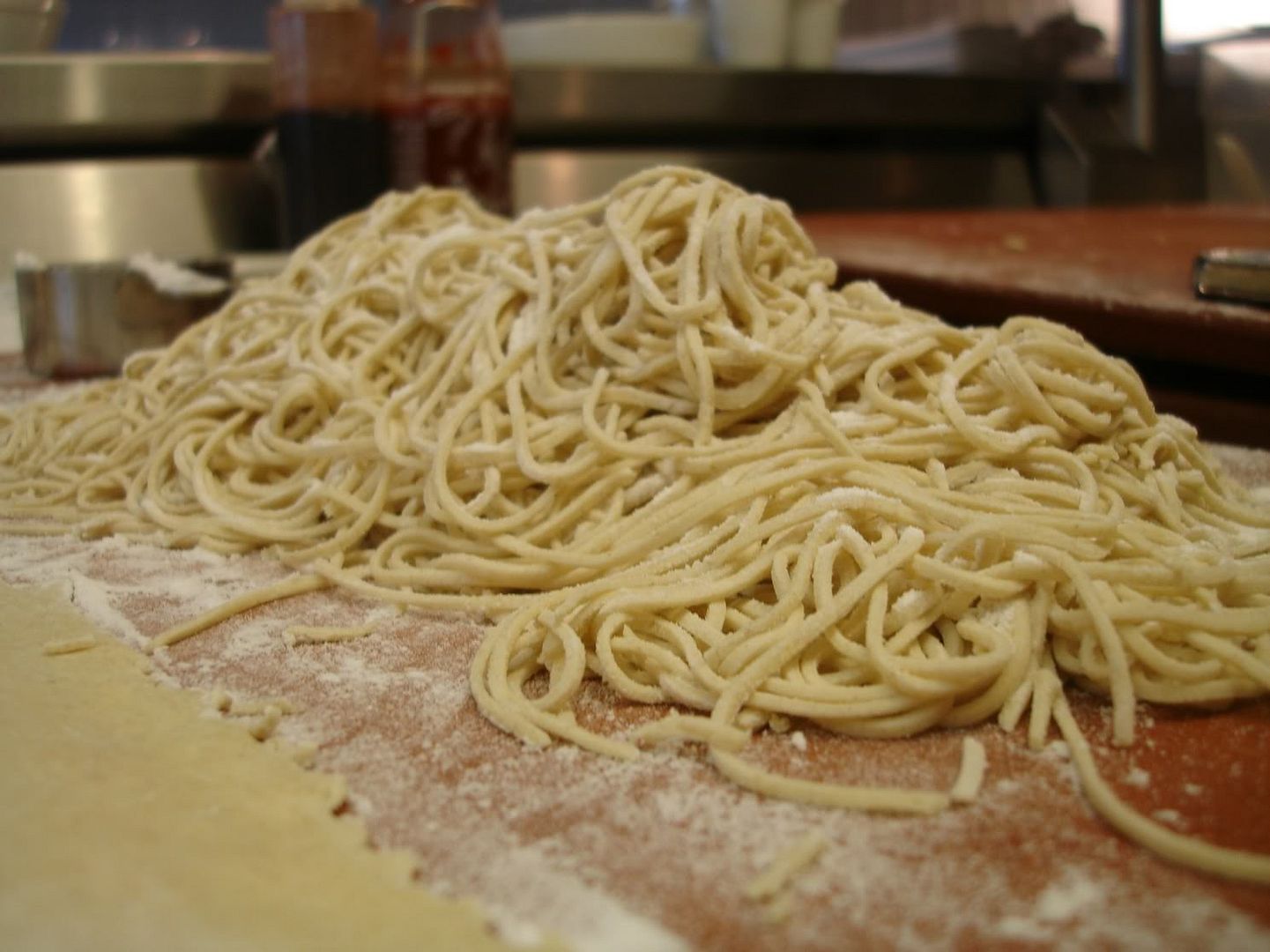
Finished ramen noodles (alkaline noodles)